What Melbourne’s Weather Actually Does to an Unprotected Car
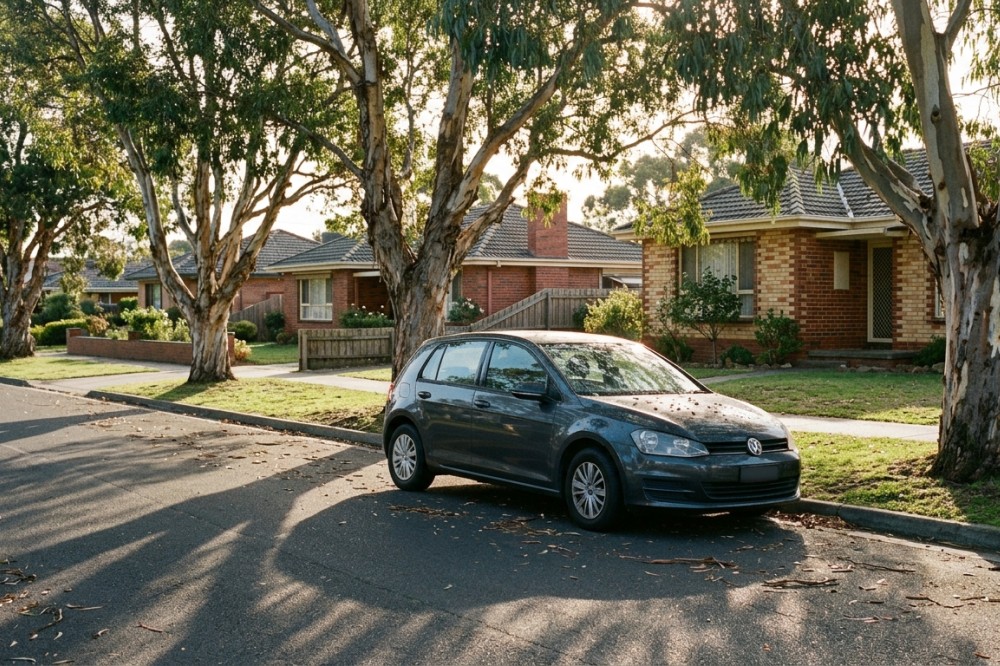
Park a dark hatchback under a gum tree in Ferntree Gully for a fortnight and you’ll see it. Sap spots baked into the clear coat, a light film of dust turned to grime after one downpour, and a bonnet that’s noticeably duller than it was a month ago. Nobody explains this to new car owners. They just notice the car looking tired earlier than it should.
Melbourne doesn’t damage paint the way people expect. There’s no single dramatic event, no hailstorm story worth telling at a barbecue. It’s cumulative. Ceramic coating conversations almost always start here, with someone finally asking why their two-year-old car looks older than the odometer suggests.
The sun does more than fade the paint
UV breaks down the resin in a clear coat slowly, and Melbourne gets plenty of it even on days that don’t feel particularly hot. A car parked outdoors in Doncaster or Glen Waverley through a full summer picks up a chalky, slightly dull finish that owners usually blame on “just needing a wash.” Often it’s oxidation, and a wash won’t touch it.
Dark colours show this first. Black and navy paint absorb more heat, which speeds up the breakdown. White cars get away with it a little longer, but not indefinitely.
Give it three or four summers without protection and even a well-maintained daily driver starts showing that dullness under direct light, the kind that’s hard to photograph but obvious in person. Buff it out once and it comes back within a season. That’s the frustrating part for owners who assume a good wax job settles the matter permanently. It doesn’t, because wax sits on the surface rather than bonding to it, and Melbourne’s UV load simply outlasts it.
Sap and bird droppings are the real local complaint
Ask anyone detailing cars across Croydon or Blackburn what actually brings people in, and it’s rarely the big stuff. It’s sap. Eastern suburbs streets are lined with gums and other native trees that drop resin constantly through spring, and that resin bonds to paint fast. Left for a few days in the sun, it hardens into something that won’t come off with a sponge.
Bird droppings are worse, honestly.
They’re acidic, and depending on what the bird’s been eating, that acidity can etch into unprotected clear coat within hours on a hot day. Not weeks. Hours.
Four seasons in one day does something specific to paint
The old joke about Melbourne weather has a real mechanical consequence for a car’s exterior. Paint and clear coat expand slightly in heat and contract in the cold, and a day that swings from 12 degrees at 7am to 28 by early afternoon puts that surface through a small stress cycle. Do that often enough over a few years and you start seeing micro-cracking, particularly around panel edges and anywhere the paint’s already thinner from factory application.
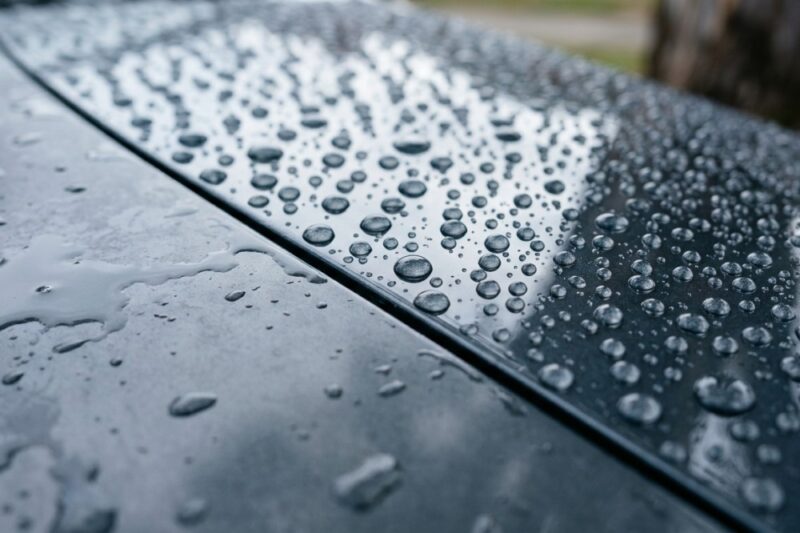
Rain doesn’t help either. Melbourne rain carries pollutants from traffic and industry, and on unprotected paint that settles into a fine layer that’s mildly corrosive over time. One wash removes the visible dirt. It doesn’t remove what’s already bonded to the surface.
Then there’s the dust. Dry spells across the eastern suburbs, especially anywhere near the Yarra Valley end of the service area, kick up a fine particulate that settles on parked cars and gets ground into the clear coat every time someone brushes it off with a dry cloth instead of rinsing first. Small scratches from that habit build up over months into a haze that shows under carpark lighting more than daylight.
Where ceramic coating actually earns its place
This is the part that gets buried in most explanations: a ceramic coating Melbourne owners have applied isn’t there to make the car shinier, though that’s the visible bonus. It’s a sacrificial barrier. UV, sap, bird droppings, road grime, all of it sits on the coating instead of bonding directly to the paint underneath. When something does stick, it comes off with a rinse instead of a compound and polish session.
That matters more in the eastern suburbs than in a lot of Melbourne postcodes, given the tree cover and the amount of street parking under them. A car garaged every night has a different risk profile to one parked under a liquidambar in Ringwood for ten hours a day.
None of this makes an unprotected car doomed. Plenty of owners get by on regular washing and the occasional cut and polish. The difference shows up slower for a car that’s garaged most nights, and faster for one parked under trees on a Doncaster driveway or left on the street in Ringwood through summer. But the gap between a coated and uncoated car after three Melbourne summers is usually obvious to anyone standing next to both.
It’s rarely a gap that a wash alone can close.
Share this article
A quick overview of the topics covered in this article.